(currently a placeholder page for 2026 progress)
After a busy 2025, where there were a large number of new dumps, but not necessarily new emulation, I think we’ll start to see a slowdown in 2026. As we saw with Jammin’ in 2025, the lengths people are having to go to in order to find previously undumped arcade games are reaching the point of extreme; while there are hundreds of known undumped arcade titles it’s possible many of those were never released, or no longer exist at all if they were. Likewise the majority of the Plug and Play devices for which there is a know dumping method have now been dumped, and even in other fields there are only a finite number of systems.
Much of the 2025 update consisted of progress that was the result of new dumps, sprinkled with a handful of important progress on systems already in MAME, and while I titled that write-up as “Time to make the most of potential” the focus on that being necessary will be even stronger in 2026.
The year started with a number of improvements to the Atari Jaguar emulation. MAME’s existing code was built mainly around the needs of the CoJag arcade games (and even then was lacking in some places) The changes allow some games to run, and have much better visuals, but at the time of writing there are still many stability issues. Atari Jaguar emulation has always been difficult to get right, especially when you can’t hide away a bunch of per-game hacks in a closed source project. Any progress is promising, but there’s still a long, long way to go at the time of writing this.


Nichibutsu’s Moon Raker is one of their less common games ‘Moon’ games and was eclipsed by the popularity of Moon Cresta. It runs on earlier tech, similar to Space Invaders, and plays very differently to either. The emulation lacks a starfield (although the unique starfield ROM is dumped) and also audio for the time being.


Atari released a game called Relief Pitcher in 1992, however the concept was originally tried 6 years earlier on their System 1 platform. The 1986 game, while built around similar ideas, is an entirely different game, with the released game being more like a sequel to it. Presentation on this one is much more cartoony, fitting with Atari’s other output at the time, while the 1992 release used more realistic looking graphics which was the way Atari were taking things after the success of Pit Fighter.


Waku Waku Jumbo is another one of the Sega “Kiddie Rides” in the Waku Waku series. This one has you flying a jumbo jet across a bunch of landscapes.


Monkichicchi no Fuwafuwa Puzzle is a puzzle game from Sunwise, running on hardware similar to many popular Toaplan shooters. It’s very likely a prototype. The version that’s been emulated is from around 1995, but apparently a revised version of the game was shown at a 1997 show in Japan with the title “Dakko-chan no Fuwafuwa Puzzle” but that version isn’t yet emulated (assuming there were any differences)


Taito’s Adventure Canoe has appeared in a number of recent Taito compilations, so is fairly well known at this point, but support was added for it in MAME.


Status Games were mostly known for casino style games as well as arcade quiz titles, all running on very primitive hardware with just a single tilemap. That didn’t stop them from trying to make a more ‘traditional’ arcade game using their hardware though, and Planet Patrol, a 1982 maze game, was the result. Clearly an attempt to cash-in on the Pac-Man craze this is a very simple game that really fails to elevate itself even beyond the most basic offerings you could play at home instead. An interesting part of history, but not a game likely to have been remembered by anybody who played it.


Qianxi Jielong / Hongxin Jielong is a card game from a lesser known manufacturer, Hom Inn. Work was done on getting the emulation running, and the game seems to be playable, although full functionality hasn’t yet been verified.


The Predators is a title that was planned to be released by Williams in 1986. Cabinets were produced for what would have been a massive 4 player head to head set-up, but ultimately the game never made it into full production. Developed by Q Video Systems this employs an unusual line blitter, for which the emulation is still imperfect.


The Microtrain developed Germ Wars has been supported in MAME for a long time as Rock-ola’s Survival, but in 2026 a version of the game carrying the original title and developer details was found. It’s a set designed for the German market, so some strings are translated, but it’s definitely closer to the original vision than the Rock-ola version, featuring a level timer to make things more challenging. Little is known about Microtrain and it’s curious that the game uses a slightly modified version of the ZX Spectrum system font.


Carnival 37 is a generic looking video slot machine, noteworthy for being from Able Corp.


AI Assists
While the use of AI, especially generative AI, in the gaming industry is seen as something controversial, the rise in the popularity and capability has helped MAME extensively over the second half of 2026. This makes sense, as MAME is primarily a research project, requiring working with large amounts of data, extensive analysis of such data and pattern recognition.
For Jaleco’s F-1 Super Battle the tools were able to help figure out the instruction set used by the (still unknown) math DSPs the game has on top of the regular MegaSystem32 hardware. Emulating these allowed the game to be playable in MAME.


Konami’s Racin’ Force was another where the AI tools proved invaluable; the hardware used on these employs a fake 3D ‘voxel’ style renderer, which turns a 2D tilemap with height information into a much less flat looking output than a standard rotating plane would otherwise allow. For the best part of 25 years nobody had been able to figure out this transformation.

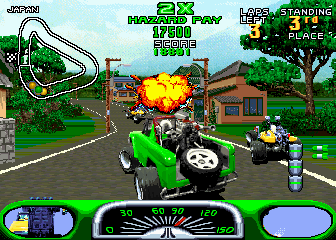
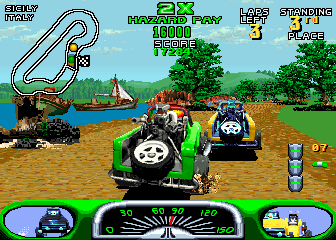
Atari’s Road Riot’s Revenge is a 1993/1994 prototype, and once again AI was a big assist in figuring out the protection issues that have haunted it for years in MAME; identifying how the protection relates to cases that were already handled such as Space Lords. With no boards available for testing this would have been nearly impossible to figure out by hand.

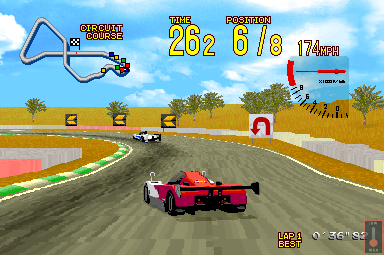
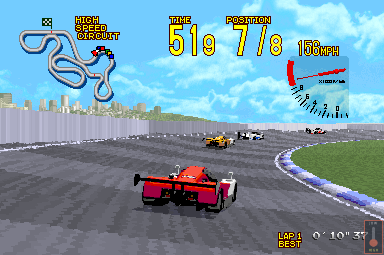
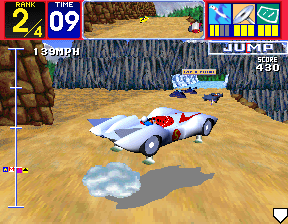
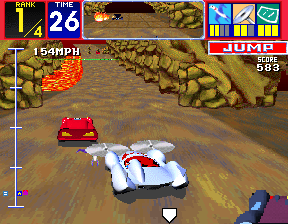
Namco’s Speed Racer saw AI assist in tracking down i960 CPU core bugs that were causing memory corruption, including issues with the road and hazard data for each track, while also providing a better understanding of the tilemap mode used by the road. A combination of those fixes means the game is really playable now, rather than being marked as working while still having serious bugs as it was before.

AI also proved useful for decryption tasks; IREM’s Beyond Kung-Fu, the unreleased sequel to Kung-Fu Master had encrypted background tilemap data. On the original hardware an MCU handles all tilemap related tasks, including decrypting that data from an external ROM, but as the internal ROM of the MCU remains undumped a simulation is needed, and that simulation needed to be able to decrypt the tilemap data. Using AI tools the encryption was figured out, and the simulation was improved to correctly render the backgrounds.


Sound emulation is another area in which the AI tools came in handy; Subsino used a custom sound chip for a number of their games, including Last Fighting. This also had some scrambling going on, which would have been very difficult to figure out otherwise.


Progress on 3D Systems
Continuing on from 2025, MAME saw more progress on the emulation of a number of 3D systems.
Sega’s Model 2 saw many more improvements, bringing titles that didn’t previously work at all to near playable status, although in some cases the visuals are still too dark by default. (Keeping this section brief for now as there might be further improvements over the course of the year which would invalidate any screenshots I upload now)


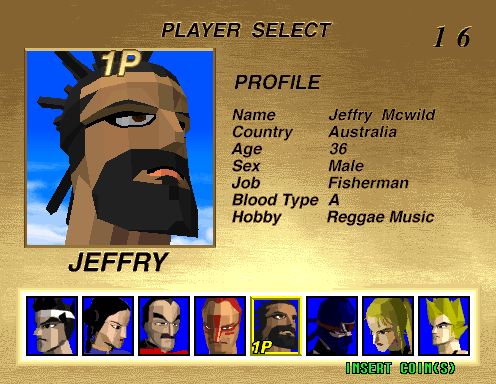
Sega’s first 3D platform, Model 1, didn’t miss out either. One of many AI assisted contributions in 2026 saw deep analysis on the remaining issues with Virtua Fighter, allowing for the player collisions to be fixed, meaning the game now plays as it should in MAME, rather than hits being semi-random, and in many cases not working at all.


Namco System 21 emulation also saw an overhaul, with visual and stability improvements across the board.


Calling the Sega Saturn a true 3D system is a push, but both the console and the ST-V arcade hardware saw improvements in 2026. One game to benefit from these improvements was Columns 97, which is possibly the most ‘Windows Shareware’ looking release Sega ever put out. Previously sound in it didn’t work at all.


Revisiting Older Drivers
IQ Pipe is one of 2 AMT developed games in MAME that’s been sat in a non-working state for many years due to protection issues. With some AI assistance in figuring out how that protection worked the game became playable in 2026.


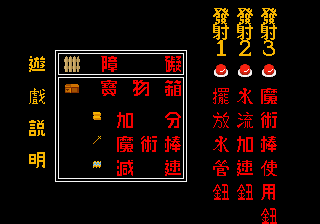

The other AMT game was Beauty Block, which used a similar protection

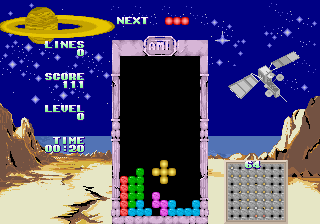


Data East’s High Sea Havoc is a rare arcade board based on Sega Mega Drive hardware with the game in question being a port of the Mega Drive game but with added coin support. Often this kind of conversion is done by bootleggers, but in this case it’s an official release, with added protection and encryption that has taken until now to figure out.


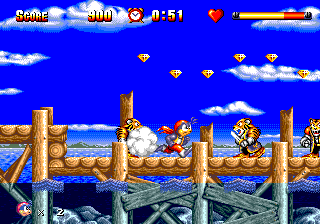

Battery Operated Games
Battery operated games, be they TV games or handhelds continued to be worked on in 2026. Amongst those was a version of Tetris put out in a mini arcade cabinet by Basic Fun. This one runs on GeneralPlus GPL951xx series hardware, but strangely bypasses the native video support to program the LCDC directly and likewise only uses the DAC output for sound. A few issues prevent it from being considered ‘working’ but it is mostly functional.


Further work was done on the GPL951xx emulation to allow some other devices to boot in MAME, such as Mazemaze Mix! Puni Tapi-chan, although these aren’t considered playable yet.


Kiratto Pri-Chan Design Palette also shows signs of life with the GPL951xx work done



Work was also done on the VT ‘enhanced NES’ hardware, including studying some of the devices where extra protection is involved. One such device is the Go Retro Portable, which now runs well enough for some of the games to be playable, including the version of Tetris found on that handheld. Other games in the collection still fail however, so overall it’s considered not working.


Most online sources said that the JAKKS Pacific Winnie the Pooh unit had no Game Key expansions released for it, with the only one being in development cancelled prior to release. This information turned out to be inaccurate, and a retail copy of the GameKey, titled ‘Sweet as Honey’ was found in Italy. Support for it was added to the driver.


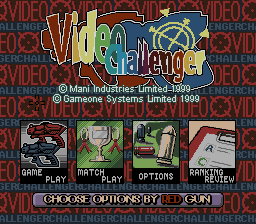
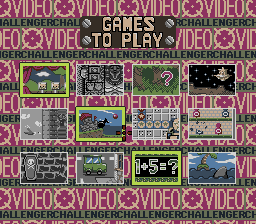
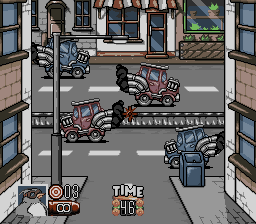
The Video Challenger (PL-1000) is a plug and play lightgun game from 1999 from Pelican Accessories, Mani Industries and Gameone Systems (not to be confused with the VHS based 1987 Video Challenger from Takara/Bandai that still isn’t emulated)
What makes this one especially interesting is that it turned out to be an early XaviX game, which wasn’t featured on any of the lists we had of games using XaviX technology. It’s possible it’s even the earliest XaviX unit we’ve seen, because while it shares a 1999 release date with a couple of VTech units the globbed die appears to lack an A15 connection anywhere, suggesting a the memory model might not have been finalized. It also doesn’t use the standard XaviX codebase the majority of the XaviX library uses which helped improve sprite emulation across the board due to differences in how it uses the hardware making a few things more obvious, something which has been a theme with these early units.

Better ROM dumps
Not all emulation bugs can be fixed just by improving the code, in some cases the only known ROM dumps are incomplete, or bad in some way. That was the case for the Japanese version of Final Lap 2, which was meant to be using different tile ROMs for the Japanese text in attract mode. With the correct ROM that text now shows correctly.


Rare Versions
One of Konami’s stranger experiments in the 80s was the use of Bubble Memory technology for a handful of their releases. The tech proved to be unreliable, so the games ended up being re-released using a more standand ROM board, but the Bubble versions are historically important, and a couple of them, including RF2 Red Fighter gained support in 2026. I don’t think there are many real difference in gameplay, but these do represent earlier versions of the code.


Puzzle World is a game put out by Afega. It sits between Dolmen, released in 1995, and Hot Bubble released in 1998. Like the other games it’s a shameless rip-off of Taito’s Puzzle Bobble but it’s interesting because Afega used a pirate theme on some of the sprites, even if that theme would be mostly abandoned again for the old sprites with Hot Bubble, although some sprites from this did end up in the later game. It is technically a unique game, but since these games are all evolutions of the same codebase I’ve put it here.


Obscurities
Turning home systems into game consoles rarely turned out well and the ill-fated Bandai & Apple collaboration that was the Pippin (based on a PowerMac) started to show signs of life in 2026.


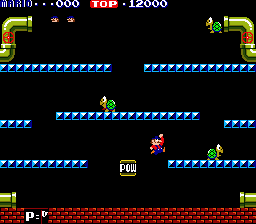
While it would difficult to call Donkey Kong or Mario Bros obscure arcade games, the 3-in-1 collection, licensed by Nintendo and distributed by Namco is definitely not the most common form to see the games in. Released in 2003 this Cosmodog developed arcade machine runs on a 260Mhz PowerPC processor and makes use of emulation under the hood. Compared to the high fidelity emulation of the titles offered for the original games in MAME today this feels very much like a 2003 era product; everything feels slightly off, not least Mario Bros, which was a originally a horizontal game, running here slightly stretched to fit a vertical monitor. The collection adds a continue feature not found in the original games, but these aren’t games where continuing would be rewarding anyway.


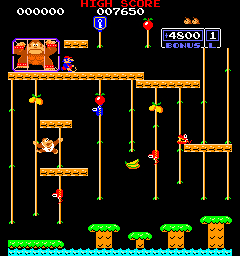
Much more obscure is what appears to be an earlier release of the original Mario Bros arcade. This version, found in 2026, has a different how to play screen, shows a different Nintendo copyright string, and maybe most significantly controls differently, with Mario continuing to move in a given direction until you press the opposite direction to stop him. Very unusual.


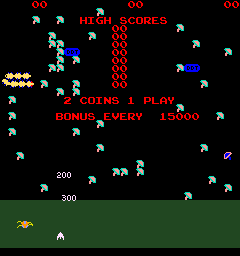
Centipede, Millipede, Missile Command, Let’s Go Bowling is another Cosmodog multi-game release, although this one takes an entirely different approach, using a CPU much closer to the original games, and a gate array which is programmed per-game to handle simulation of the other board features of the originals. Both the later revision, with Let’s Go Bowling, and an older one, before the 4th game was added, are supported.



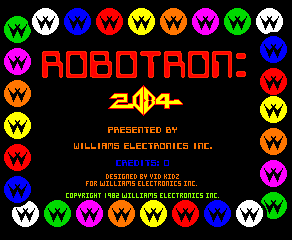
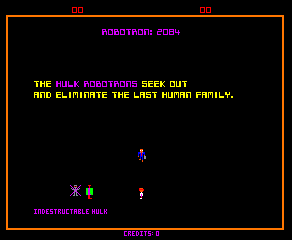
A specific prototype revision of Robotron 2084 was preserved, this one contains some censorship not found in any earlier or later revisions, with the skull and crossbone graphic usually shown when a human dies replaced with a crossed-out figure.

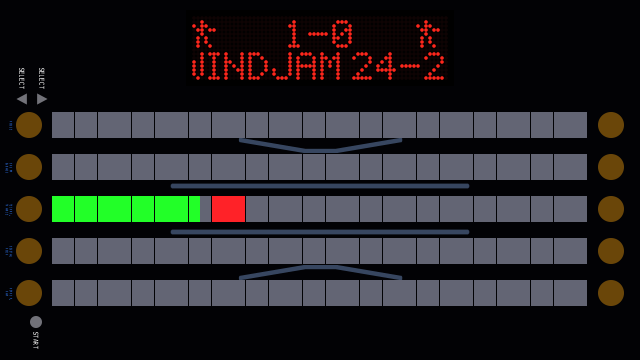
Sega’s Flash Beats is a competitive music game that mostly used lamps for gameplay, with a small dot matrix display (as you’d find on a pinball machine) The non-video parts were emulated with MAME’s artwork system, leading to a playable game.


American Laser Games developed some arcade titles using the 3DO console as a base, one of them was the unreleased Orbatak, which with improvements to MAME’s base 3DO emulation is now mostly working in MAME; a few graphical errors remain.



Improving On the Already Good
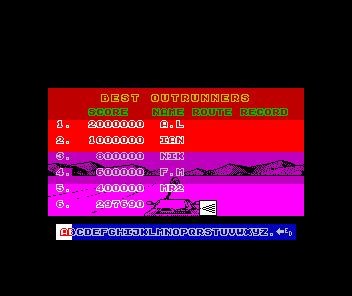
MAME’s basic ZX Spectrum emulation is as good as any out there, and is perfectly capable of running all the newer releases for the system that push the hardware to its limits. One area it was found lacking however could be seen with the disk based software for the +3 machines. While the Spectrum didn’t have an extensive disk based library compared to other 8-bit home computers a decent number of games were officially released on disk, and with that came a bunch of disk based copy protections, which were previously failing in MAME. Out Run is one example, and while it’s a terrible port, the original copy protected disk release of the game can now be played in MAME.


Small Steps Forward
Sega’s Picture Magic was an attempt to reuse some of the 32X design, but as a digital painting system. While not yet functional due to missing inputs, it does now boot in MAME